THE WINTER HIGHLIGHTS OF MONGOLIA
TOUR DATES FOR 2009: |
||||
|
|
|||
PRICE PER PERSON: |
||
|
||
| DIFFICULTY RATING: | |||||
TOUR INTRUDUCTION:
A collection of the worthiest winter attractions: Lunar New year celebration,
Golden Eagle festival, Thousand camel festival in the Gobi desert, the 13th
century Mongol village and a life re-enactment of the Story of the Weeping
camel - a unique combination of reality, drama and magic, organized by
Mongolia Expeditions.
PRICE INCLUDES:
6 overnights in a 4 star hotel (twin shared), 1 night in a visitor yurt camp, 4 overnights in the 3 Camel lodge,
3 overnights in herders' yurt, all itinerary related transfers, internal flights, meals as indicated (B-breakfast, L-lunch,
D-dinner), all visits & environmental fees, camping equipment, English speaking guide-translator.
PRICE EXCLUDES:
Travel insurance, excess luggage fees on internal flights, meals not indicated, gratuities, drinks.
TOUR GALLERY:
|
|||||
DAY BY DAY ITINERARY:
Day 1: Feb 23, 2009 Arrival in Ulaanbaatar (UB), tour briefing
Arrival in Ulaanbaatar, transfer to a 4 star hotel in central city. Mongolia's
sprawling capital that houses over a million inhabitants. The temperatures will
till be below zero and the city gives a distinct feeling of resistance and survival
against the harsh climate of Central Asia. Nevertheless, atmosphere of vibrant
changes and springing towards modernization is dominating. Late afternoon tour
briefing and a show of traditional music, throat singing and contortion will be
followed by a welcome dinner. (hotel / D).
Day 2 & 3: Feb 24 & 25, 2009 Guided city tour & the New Year celebration
A guided city tour will introduce you to some of the highlights of the vibrant city:
Gandan Temple - city's main Buddhist center, the city square with a grand statue of
Chinggis Khan and the Zaisan Memorial, an elevated hill on the city's edge providing
a panoramic view of UB. Then an optional visit to the Museum of National History
featuring a collection of traditional costumes of Mongolia's many ethnic groups.
After lunch 1 hr transfer to celebration camp, comprised of traditional felt tents
which will become your house for the night.
The Lunar New year or as it is locally known the Tsagaan Sar (literally meaning White Moon) is practically a re-union with all the relatives, friends and neighbors after the long cold winter. A multitude of traditional rituals, events and games can be seen here. Every Mongol is expected to greet others with an open heart full of benevolence; a soul "white like milk" - hence is the name of the celebration.
Local nomads will introduce you to traditional games, rituals and ceremonies held as part of the celebration. A dinner marks the end of the year to go by and a colorful greeting ceremony the start of the new year next morning. At the end of the second day we return to UB for dinner and overnight. (B,L,D)
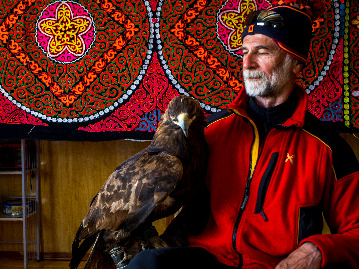
Day 4: Feb 26, 2009 Golden eagle festival in Terelj national park
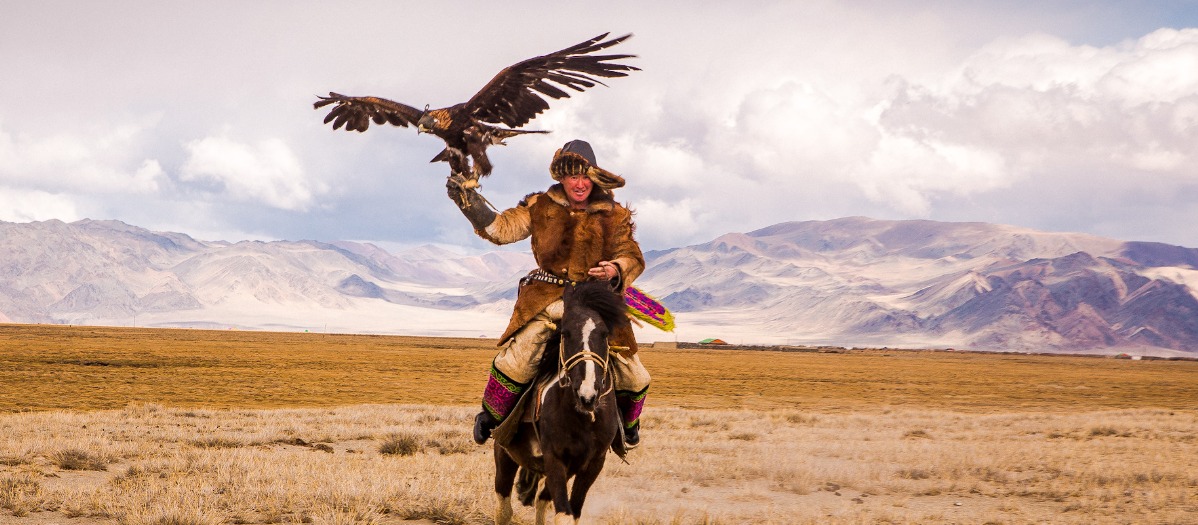
Kazakhs, the Islam worshiping minority of Mongolia have preserved the ancient traditions of
hunting with Golden Eagles. Caught at the age of 2 or 3 the eagles are trained to catch foxes,
hares and other minor mammals.
For one day the Terelj NP east of UB marking the southern limit of the Siberian taiga will become the meeting point of the best falconers. A short parade where all contestants ride on horseback with their birds on hand determines the best looking bird, horse harness and falconer outfit. Then comes time for real action: in a row the birds' speed and agility are tested. Depart in the morning from UB and return in the evening for dinner and overnight. (hotel / B,L,D)
INTRUDUCTION TO THE WEEPING CAMEL STORY:
Have you ever seen The Story of the Weeping Camel or heard of it? It is an enchanting
film that follows adventures of herders in Mongolia's Gobi desert who face a crisis
when the mother camel rejects her newborn calf. Shot by a Mongolian and an Italian
and nominated for Oscar for Best Documentary Feature the film has brought unique
traditions of Mongolia's nomads to the world audience.
Mongolia Expeditions invites you to experience this unique combination of reality, drama and magic on our new project named "The True Story of the Weeping Camel" and a deep insight into a different way of life and the universal terrain of the heart. This live "re-enactment" of the film's story is organized during March-May, just after the birth giving season of camels.
|
|||||
Day 5: Feb 27, 2009 Flight to Gobi desert & travel to herders' camp
Morning transfer for a 1.5 hour flight to Gobi Desert. You guide and translator will
accompany you on board. Gobi in winter is a particularly pretty but rough place. Its
vast plains/spaces are pleasantly warm during daytime when it is still. With winds
rising temperatures plummet to freezing levels. Upon landing we drive to a camel
herders' camp in the middle of nowhere. A felt covered traditional tent/yurt will
be your accommodation for the next 3 nights.
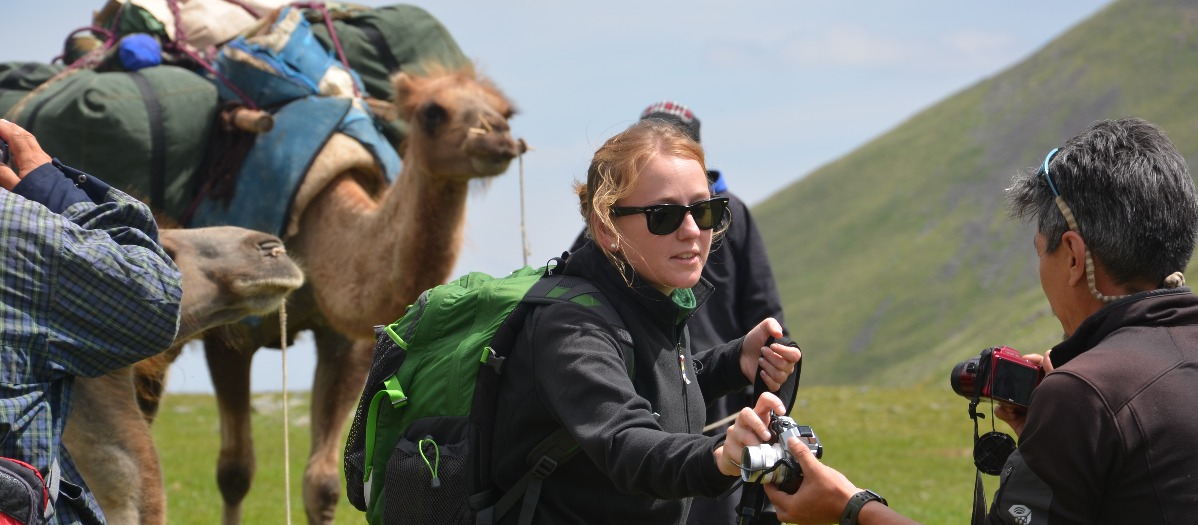
Your first question would certainly be: "And where is the poor baby camel?" By nature camels happen to reject their babies quite often due to various reasons so you would definitely see a poor youngster tethered nearby grieving for his mother. Traditional lunch will be offered to those curious; a more common to your taste meal will also be available. We explore the surroundings and learn about the living and survival in desert. (yurt / B,L,D).
Day 6: Feb 28, 2009 Camel journey to bring a musician
In the Gobi there are no other means of effective communication but to physically travel
if distances allow. Today you will be assigned a role of a messenger to fetch a fiddler
from a tiny village in a day's travel distance from the camp. A camel will be selected
for you and comprehensive instructions on riding given. You will ride across empty spaces
heading towards distant mountain ranges. The oddly clear air shimmers with thousands of
minute particles of frost. We stop few times during our challenging journey for hot drinks
and leg stretching. Tonight we will spend the only overnight of your lifetime in a winter
desert. A warm tent will be set up during the night and a simple but nutritious dinner
served. This will be one in a lifetime experience, without doubt. (tent / B,L,D).
Day 7: Mar 1, 2009 Meet the musician & overnight in his village
Very early in the morning we ride for another hour to reach the village. Upon arrival we meet
the fiddler in his home. A blue silken scarf, known as 'khadag' will be delivered to him together
with the message. It symbolizes the clarity of your intentions. The remaining day we leisurely
stroll around the village: possibly visit the local market, school etc. (yurt / B,L,D).
Day 8: Mar 2, 2009 Return Motorbike ride to the camp & re-adoption ceremony
After some rest and lunch together with the fiddler we travel back to the camp on Russian
motorbikes or sidecars that serve as taxis among villagers. This will be another unique
experience of your lifetime. Local riders will safely deliver you to the herders' camp.
On arrival in the early afternoon everybody gathers near the mother camel and her baby to witness a touching scene. The fiddler plays a sad melody to the mother camel as if persuading her to re-adopt the poor baby and give her love and milk. The final is classical: the mother camel cries with real tears and lets the baby drink her nutritional milk.
We all gather to celebrate the happy end of our story of the weeping camel. Then we say goodbye to the hosts and drive to the Three Camel Lodge - an island of luxury amidst desert. Hot showers and overnight in comfortable yurts. (lodge / B,L,D).
|
|||||
Day 9 & 10: Mar 3, 4, 2009 Thousand Camel Festival
370000 two humped or so-called "Bactrian" camels roam the vast spaces of the Gobi desert. They were
domesticated thousands of years ago and are closely related to its endemic relative, the wild camel
known in Mongolian as Khavtgai. For 2 days the festival unfolds around camel races, camel parade and
a camel polo. Each day we take short trips to witness the festival's events returning to the lodge
for meals and overnight. (lodge / B,L,D).
Day 11: Mar 5, 2009 Visit to Flaming Red Cliffs
A day trip to the Flaming Red Cliffs. The Gobi desert is famous for its paleontology riches.
In the early 1920-ies an American scientific expedition led by Roy Chapman Andrews who later
became director of the Museum of the Natural History of America and a prototype of "Indiana
Jones" discovered the first ever dinosaur egg nest and unearthed a dozen of new dinosaur species'
remains. Walk the rock hard sandy cliffs and try to make your own discovery. Overnight in the Three Camel Lodge. (lodge / B,L,D).
Day 12: Mar 6, 2009 Return flight to UB, optional shopping
Today we take a return flight to UB. On arrival transfer to your hotel. Optional shopping in the afternoon. (hotel / B).
Day 13: Mar 7, 2009 Visit to the "13th century Mongol camp"
A day trip to visit the 13th century Mongol camp, a brand new project that restores the medieval
life of Mongols to minute details. It consists of 4 camps: an "Educational camp", "Herdsmen camp",
"Shaman's camp" and "King's Palace". This is a massive life show where everybody is dressed in a
traditional clothing, practice ancient handicrafts and lead the life ways of the 13th century.
Traveling from one camp to another you can learn traditional cooking, needlework, calligraphy,
try Mongol costumes on etc. The Kings Palace is a huge stylized yurt-restaurant where guest
are greeted with drum beats and warriors on horseback. Farewell dinner on return to UB. (hotel / B,L,D).
Day 14: Mar 8, 2009 Departure transfer
Today you will be transferred for your journey home. (B).