Travel News/Blog
Hemu Village & Altai Powder: Tracing the Origins of Skiing in Xinjiang’s Hidden Frontier
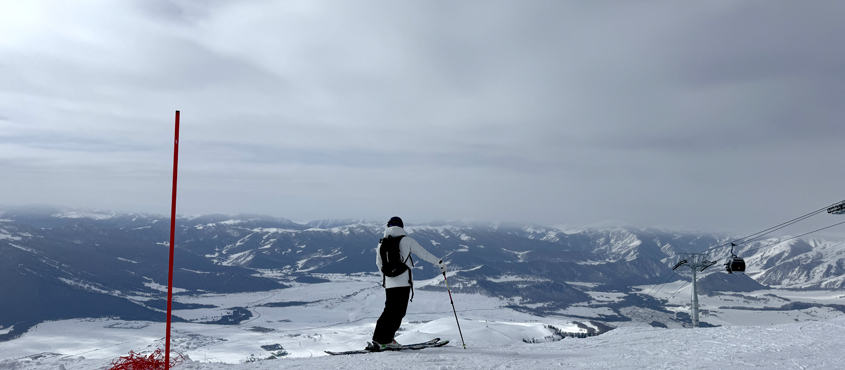
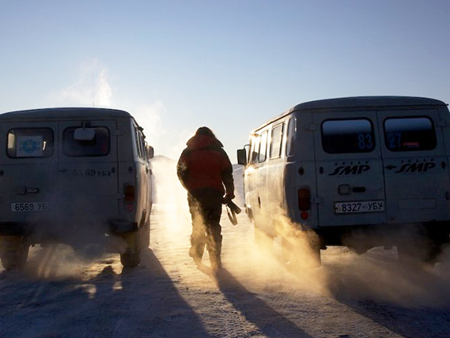
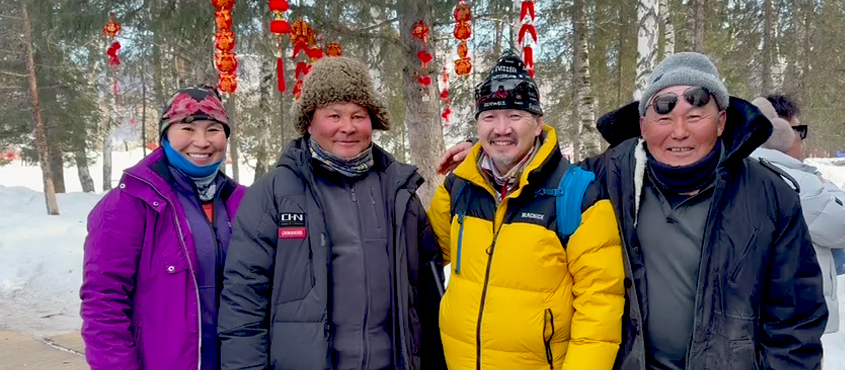
From March 10–18, 2026, our Mongolia Expeditions team explored the remote frontier of Hemu Village, deep within the Kanas Nature Reserve in the Altai Mountains of Xinjiang. Home to around 2,000 inhabitants—primarily Mongolian Uriankhai and Tuva communities—this isolated settlement lies at the cultural crossroads of Russia, Mongolia, Kazakhstan, and China. The region is widely regarded as one of the earliest birthplaces of skiing, supported by archaeological discoveries across the Altai Mountains, including 3,000–5,000-year-old petroglyphs depicting hunters moving on wooden skis along the Oigor River in the Mongolian Altai. These findings, documented in regional archaeological studies and referenced by institutions such as the UNESCO and Siberian ethnographic research, confirm that skiing here evolved as a survival tool long before becoming a sport. Remarkably, this heritage remains alive—local families in Hemu still craft and use traditional wooden skis in winter. The village itself is set in a dreamlike alpine landscape, where the Hemu River flows from the Mongolian Altai, weaving through forests beneath the slopes of Emeelt Mountain. Since 2020, the nearby Jikepulin Ski Resort has transformed the region into one of Asia’s fastest-growing winter destinations. With elevations ranging from 1,383 to 2,779 meters, approximately 70–100 km of ski terrain, nearly 10 lifts, and vertical drops reaching 1,466 meters, it offers long descents of up to 11 km and exceptional dry powder conditions often compared to Hokkaido. Daily skier capacity now reaches 5,000–7,000, reflecting rapid international interest. Access remains part of the adventure—direct flights from Beijing or Shanghai connect to Altai town, followed by a 220–300 km overland journey (5–6 hours) by 4WD through narrow, often snow-covered mountain roads, with total travel time of 1.5–2 days. For us, this journey was far more than a ski trip—it was a deep immersion into the origins of skiing culture. Descending from the summit ridgelines near Serevger Tenger 2,800 m, riding through silent taiga forests into Hemu village, and engaging with local families offered a rare blend of exploration, heritage, and true Altai adventure—an experience that defines the spirit of Mongolia Expeditions.